

Website design in Sri Lanka can cost approximately LKR 30,000 for a simple one-page website and several hundred thousand rupees or more for a custom corporate website, ecommerce store or web application. The final price depends on the website’s purpose, number of pages, design requirements, functionality, content, integrations and ongoing support.
For business owners, the important question is not just how much a website costs. It is what is included in the quotation, what additional expenses you should expect and whether the website will support your business as it grows.
In this guide, we break down website design prices in Sri Lanka, explain the factors that affect development costs, compare different website types and show you how to choose a suitable web design company.
Last updated: October 2026. Prices are indicative planning estimates unless identified as published provider prices.
How Much Does Website Design Cost in Sri Lanka?
The following table provides indicative website development budgets for businesses in Sri Lanka in 2026.
| Website type | Indicative project budget |
|---|---|
| One-page website | LKR 30,000–80,000 |
| Small business website | LKR 50,000–200,000 |
| Professional corporate website | LKR 150,000–600,000 |
| Ecommerce website | LKR 150,000–1,200,000+ |
| Custom web application | LKR 300,000–3,000,000+ |
| Website redesign | Depends on the existing website and project scope |
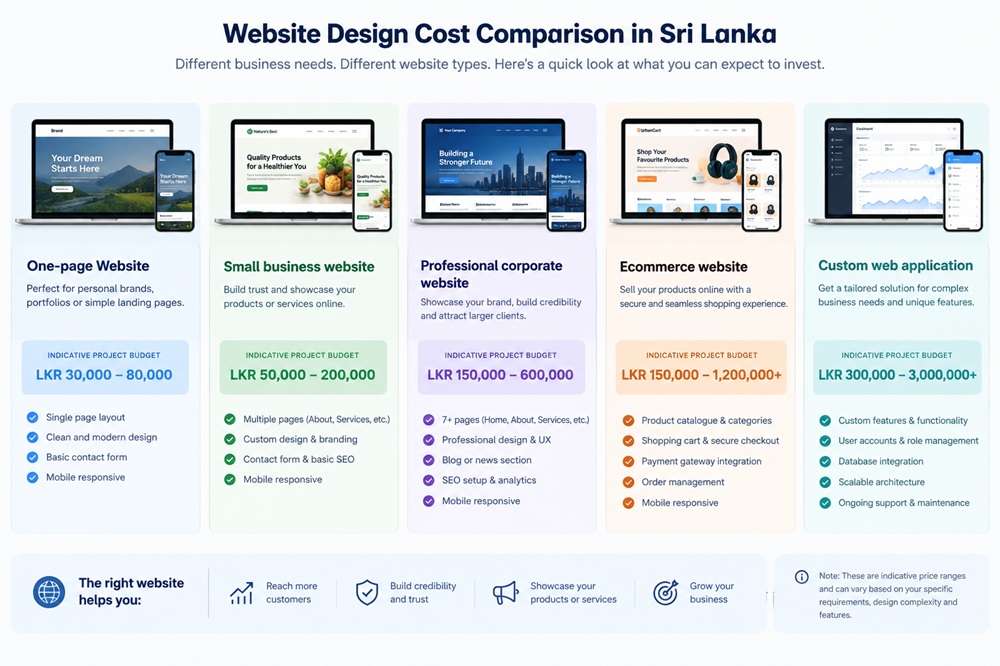
These are broad planning ranges, not official industry averages or guaranteed quotations. Published Sri Lankan provider prices differ according to the services, features and support included. For example, some providers advertise one-page websites starting below LKR 30,000, while others quote substantially more for custom development.
Your actual price will depend on the requirements of your project.
A five-page website containing a homepage, about page, services page, contact page and enquiry form is different from a five-page website with custom layouts, multilingual content, CRM integration, booking functionality and advanced tracking.
The number of pages alone does not determine the development cost.
The best way to estimate your website budget is to define its purpose, required pages, functionality, content and integrations before requesting quotations.
Website Design Prices by Website Type
1. One-Page Website
Indicative budget: LKR 30,000–80,000
A one-page website is suitable for businesses that need a simple online presence or a focused landing page for a particular service, product or advertising campaign.
A typical one-page website may include:
- Business introduction and company information.
- Services or product overview.
- About section.
- Contact information.
- Enquiry form.
- WhatsApp or telephone contact button.
- Google Maps integration, where relevant.
- Mobile-responsive layout.
- Basic on-page SEO setup.
Suitable for: Freelancers, consultants, personal brands, small service providers and startups.
A one-page website can be a practical starting point. However, businesses offering multiple services may benefit from separate service pages that explain their offerings in greater detail.
2. Small Business Website
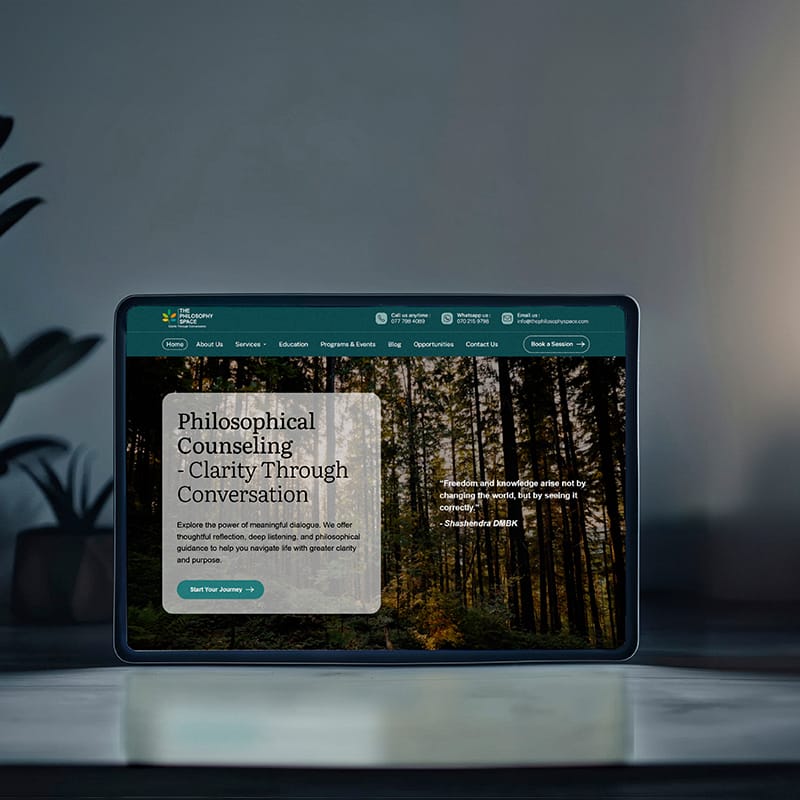
Indicative budget: LKR 50,000–200,000
A small business website generally contains multiple pages explaining the company, services, products and contact information.
A typical website structure includes:
| Page | Purpose |
|---|---|
| Home | Introduces the business and its main services |
| About Us | Explains the company and its background |
| Services | Presents the services offered |
| Individual service pages | Explains important services in detail |
| Contact Us | Provides contact and enquiry options |
| Blog | Publishes useful articles and business updates |
Additional features may include:
- Contact and quotation forms.
- WhatsApp integration.
- Image galleries.
- Google Maps.
- Blog management.
- Basic analytics integration.
- Search-friendly URLs.
- Content management through WordPress.
Suitable for: Small and medium-sized businesses, professional service providers, local companies and growing startups.
The final quotation depends on the number of unique page designs, content requirements, functionality and customization.
3. Corporate Website
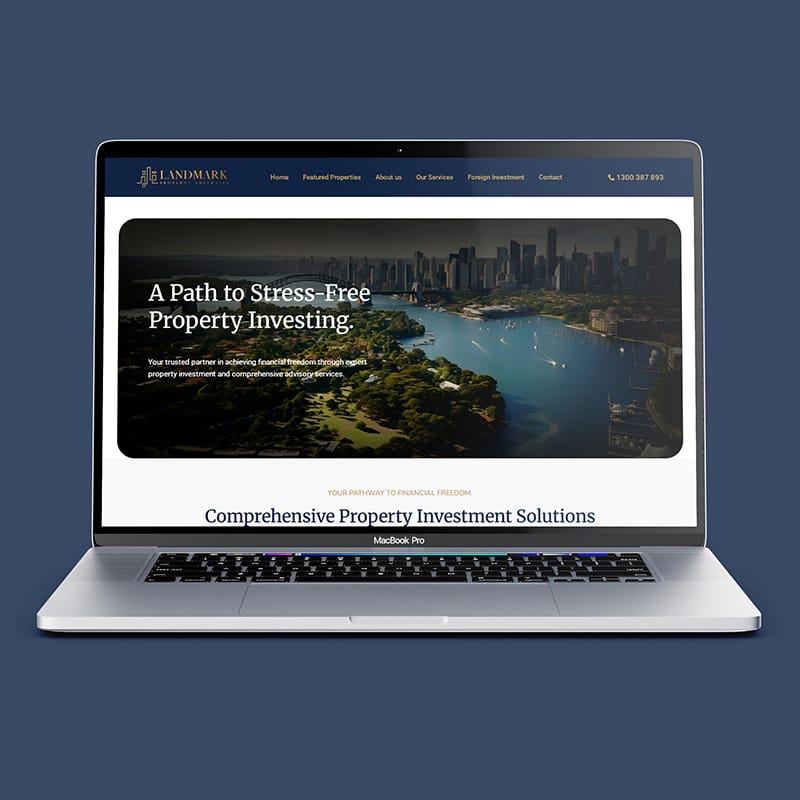
Indicative budget: LKR 150,000–600,000
Corporate websites usually require more planning and customization than basic business websites.
An established company may need to present multiple departments, business divisions, services, projects, locations and corporate information.
Common requirements include:
- Custom UI/UX design.
- Multiple service and department pages.
- Corporate project portfolios.
- News and announcements.
- Careers and recruitment sections.
- Multilingual functionality.
- Advanced enquiry forms.
- CRM integrations.
- Analytics and conversion tracking.
- Security and performance requirements.
For example, a construction company may require project galleries, service pages, tender enquiry forms and downloadable company profiles.
A hotel may require room listings, booking functionality, image galleries and integration with an external reservation system.
These are different projects, even though both fall under corporate website development.
Suitable for: Established businesses, manufacturers, construction companies, hotels, large organizations and companies with complex service structures.
4. Ecommerce Website
Indicative budget: LKR 150,000–1,200,000+
An ecommerce website allows businesses to sell products online, accept orders and manage their stores through a website.
Unlike a standard business website, an online store requires additional functionality for products, customers, payments, shipping and order management.
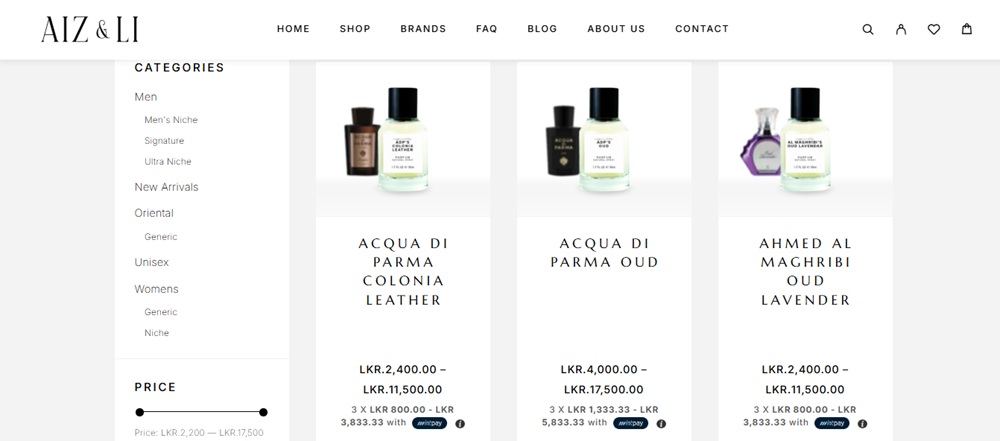
Common ecommerce features include:
- Product catalogue and categories.
- Product images and descriptions.
- Shopping cart and checkout.
- Payment gateway integration.
- Cash on delivery, where supported.
- Shipping and delivery configuration.
- Inventory management.
- Customer accounts.
- Discount coupons.
- Order management.
- Product search and filters.
- Sales reporting.
For Sri Lankan businesses, payment integrations may involve providers such as PayHere, WEBXPAY and DirectPay. Confirm merchant eligibility, supported payment methods, transaction fees and integration requirements directly with the payment provider.
Tectera’s published ecommerce packages
Tectera currently publishes the following starting prices for its WooCommerce development packages:
| Package | Starting price | Published timeframe |
|---|---|---|
| Basic | LKR 149,000 | 4 weeks |
| Standard | LKR 199,000 | 6 weeks |
| Advanced | Request a quotation | 8 weeks |
The Basic package includes a WooCommerce store, payment gateway integration, product management, order management, mobile-friendly design, one year of hosting and SSL, and two months of free maintenance.
The Standard package adds features such as blog integration, product attributes, product filtering, coupon codes, Google Search Console setup and four months of free maintenance.
The Advanced package includes additional capabilities such as multi-vendor, multi-currency and multilingual functionality.
These are Tectera’s published package starting prices and inclusions. Confirm the current quotation, scope and applicable conditions with the company before purchasing.
For more information, visit Tectera’s Ecommerce Website Design and Development page.
5. Custom Web Application
Indicative budget: LKR 300,000–3,000,000+
A custom web application is different from a standard informational website. It may require custom workflows, databases, user accounts, dashboards and integrations with other systems.
Examples include:
- Customer portals.
- Employee management systems.
- Online booking platforms.
- ERP and CRM systems.
- Learning management systems.
- Membership platforms.
- Property management systems.
- Subscription-based software.
The development cost depends on user roles, business rules, integrations, security requirements, data processing and testing.
For example, a simple appointment booking system and a multi-branch reservation platform with customer accounts, staff dashboards and payment processing require very different levels of development.
For these projects, request a requirements assessment and a detailed quotation before agreeing on the budget.
6. Website Redesign
Website redesign costs depend on whether the project involves visual improvements or complete redevelopment.
| Redesign type | Work involved |
|---|---|
| Visual refresh | Updating layouts, colours, typography and images |
| Responsive redesign | Improving mobile and tablet usability |
| Structural redesign | Reorganizing navigation, pages and content |
| SEO-conscious redesign | Improving the website while protecting existing search visibility |
| Complete redevelopment | Rebuilding the website, functionality and technical infrastructure |
A simple visual refresh may be relatively inexpensive. A complete redesign involving content migration, new functionality, URL changes and third-party integrations may cost as much as building a new website.
Important: If your existing website receives organic traffic, review its important URLs, backlinks, indexed pages and existing rankings before making changes. Prepare appropriate 301 redirects for URLs that change, preserve valuable content and test the new website before launch.
What Factors Affect Website Design Cost in Sri Lanka?
Two web design companies may quote very different prices for what appears to be the same website. The following factors help explain why.
1. Number of Pages and Page Complexity
The number of pages affects the amount of design, development and content work required.
However, not every page requires a completely new design.
For example, an ecommerce website may contain hundreds of product pages generated using one product template. A corporate website may contain only 15 pages, but each service page may require a unique layout, custom graphics and detailed content.
When requesting a quotation, ask how many unique page templates and how many content pages are included.
2. Custom Design vs Ready-Made Templates
A template-based website uses an existing design that is customized with your company’s logo, colours, images and content.
A custom-designed website is planned around your brand, audience, business objectives and functionality.
| Comparison | Template-based design | Custom design |
|---|---|---|
| Initial cost | Generally lower | Generally higher |
| Design flexibility | Depends on the template | Greater flexibility |
| Development time | Often shorter | Often longer |
| Branding | Uses an existing design foundation | Tailored to the brand |
| Functionality | Depends on theme and plugins | Designed around requirements |
| Best suited for | Simple websites and limited budgets | Specific business requirements |
Custom design does not automatically guarantee better Google rankings or faster loading. Performance depends on implementation, hosting, code quality, content and ongoing maintenance.
3. Website Platform and Technology
The platform influences development time, customization options, maintenance and ongoing expenses.
WordPress
WordPress is suitable for business websites, corporate websites, blogs and ecommerce stores using WooCommerce.
It provides a content management system that allows authorized users to update pages, images, articles and products.
Shopify
Shopify is designed primarily for online stores. It provides ecommerce functionality through a hosted platform and subscription model.
Businesses should consider subscription costs, apps, payment options and platform requirements when estimating total ownership costs.
Custom development
Custom development is useful when a business needs functionality that cannot be efficiently delivered through an existing platform.
Examples include customer portals, custom booking systems, internal dashboards and complex integrations.
The right technology depends on what your website needs to accomplish, not simply which platform is most popular.
4. Ecommerce and Payment Gateway Functionality
An online store with a simple product catalogue is different from a large ecommerce platform.
Additional requirements that can increase development costs include:
- Large product catalogues.
- Product variations and attributes.
- Multiple payment gateways.
- Shipping integrations.
- Automated stock management.
- Customer accounts and order tracking.
- Multi-vendor functionality.
- Multiple currencies and languages.
- ERP or accounting integrations.
Before requesting an ecommerce quotation, prepare an approximate product count, product categories, payment requirements and delivery process.
5. Website Content and Copywriting
Website content is an important part of the project budget.
You may need:
- Homepage copy.
- About Us content.
- Service descriptions.
- Product descriptions.
- Frequently asked questions.
- Images and illustrations.
- Case studies and testimonials.
If your business provides finalized content, the developer may only need to upload and format it.
If the agency must research, write, edit and optimize the content, additional work is involved.
For businesses targeting customers in Sri Lanka, content may also need to be available in English, Sinhala and Tamil. Translation, additional page layouts and multilingual functionality can affect the project budget.
6. UI/UX Design and User Experience
UI (User Interface) refers to the visual elements of a website, while UX (User Experience) focuses on how people navigate and interact with it.
Good UX planning considers:
- Navigation and page structure.
- Mobile usability.
- Readability.
- Contact and enquiry journeys.
- Product discovery.
- Checkout experience.
- Accessibility.
- Calls to action.
A website intended to generate qualified business enquiries may require more planning than a basic informational website.
7. Third-Party Integrations
Integrations connect your website with other services and business systems.
| Integration | Business purpose |
|---|---|
| Payment gateway | Accept online payments |
| CRM | Manage customer enquiries and sales |
| Allow customer communication | |
| Google Analytics 4 | Measure website activity |
| Google Search Console | Monitor organic search performance |
| Booking system | Accept appointments and reservations |
| Email marketing platform | Manage subscribers |
| ERP | Connect website activity with business operations |
| Shipping API | Calculate delivery and track orders |
Some integrations only require configuration. Others require custom API development, testing and ongoing maintenance.
8. Website Security and Performance
A professional website should be developed with security and performance in mind.
The project scope may include:
- HTTPS configuration.
- Secure administrator access.
- Software and plugin updates.
- Automated backups.
- Image optimization.
- Browser caching.
- Responsive layouts.
- Performance testing.
- Spam protection.
- Form validation.
More demanding websites may require additional infrastructure, security testing, monitoring and performance engineering.
Additional Website Costs You Should Consider
The initial development quotation does not necessarily include every expense associated with operating a website.
Before approving a project, understand which costs are included and which will be charged separately.
1. Domain Registration
A domain name is your website’s internet address, such as yourbusiness.lk or yourbusiness.com.
For a Sri Lankan business, a .lk domain may be appropriate if you want a local country-code domain.
According to the LK Domain Registry’s published tariff:
| Domain category | Annual price |
|---|---|
Economy .lk only |
LKR 5,000 |
| Standard full domain package | LKR 8,000 |
| Budget second-level domain | LKR 1,000 |
These prices include VAT according to the Registry’s published tariff. The Budget category applies to eligible second-level domains such as .com.lk, rather than a direct .lk registration.
Premium and desirable domain names have separate pricing.
Check the official LK Domain Registry pricing page before registering because domain prices and conditions can change.
2. Website Hosting
Web hosting stores your website’s files, database and other resources and makes them accessible online.
Hosting requirements depend on:
- Website size.
- Monthly traffic.
- Ecommerce functionality.
- Database usage.
- Server resources.
- Security requirements.
- Backup and recovery needs.
A small business website may work well with suitable shared hosting, while a larger ecommerce store or custom application may require more powerful infrastructure.
When comparing hosting packages, check renewal prices, storage, bandwidth policies, backups, support and migration options.
3. SSL Certificate
An SSL/TLS certificate enables HTTPS encryption between your website and visitors.
Many hosting providers include SSL certificates, while other configurations may require paid certificates.
Confirm whether SSL setup and renewal are included in your hosting arrangement.
4. Website Maintenance
A website needs ongoing attention after launch.
Maintenance can include:
- WordPress core updates.
- Theme and plugin updates.
- Security checks.
- Database optimization.
- Backup monitoring.
- Bug fixes.
- Form testing.
- Performance monitoring.
- Technical troubleshooting.
Maintenance may be provided through a monthly agreement, annual package or ad hoc support arrangement.
Ask whether the maintenance agreement covers technical updates only or also includes new content, design changes and additional functionality.
5. Premium Plugins, Themes and Subscriptions
Some websites require paid tools for specific features.
Examples include:
- Premium WordPress plugins.
- Page builder licences.
- Booking software.
- Email marketing tools.
- Advanced security tools.
- Ecommerce extensions.
- CRM subscriptions.
Check whether licences belong to your business or are provided through the developer’s agency account. Also confirm what happens if the maintenance agreement ends.
6. Content Writing and Photography
Professional copywriting, product descriptions, photography and illustrations may be separate expenses.
For businesses that depend on customer trust, good photographs and well-written service descriptions can make a significant difference to the website experience.
7. SEO and Digital Marketing
Building a website and promoting it are two different activities.
Basic SEO implementation during website development may include:
- Search-engine-friendly URLs.
- Page titles and meta descriptions.
- Heading structure.
- Image alt text.
- XML sitemap configuration.
- Mobile-friendly design.
- Basic technical SEO checks.
Analytics and Search Console configuration can help measure and monitor website performance, but these are measurement tools rather than SEO improvements by themselves.
Ongoing SEO is a separate activity that may involve keyword research, content creation, competitor analysis, technical improvements, internal linking and authority building.
If organic search traffic is important to your business, consider Tectera’s SEO services.
Businesses using social platforms to generate awareness and enquiries may also consider Tectera’s social media marketing services.
How Much Does a Website Cost Over Three Years?
Looking only at the initial development price can lead to an incomplete budget.
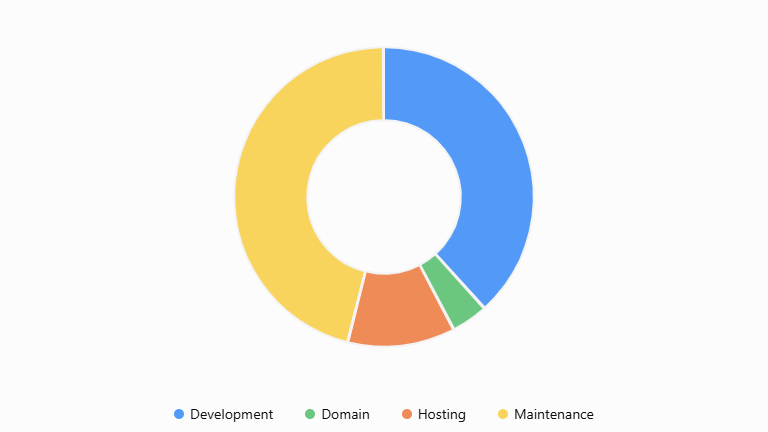
Consider this hypothetical example for a small business website.
Illustrative calculation only. Hosting and maintenance figures are assumptions, not published Tectera rates or verified market averages.
| Expense | Assumed cost |
|---|---|
| Initial website development | LKR 150,000 |
.lk domain – 3 years, Economy category |
LKR 15,000 |
| Hosting – LKR 15,000 per year | LKR 45,000 |
| Maintenance – LKR 5,000 per month for 36 months | LKR 180,000 |
| Total three-year cost | LKR 390,000 |
Calculation:
LKR 150,000 + LKR 15,000 + LKR 45,000 + LKR 180,000 = LKR 390,000
This example shows why ongoing maintenance can materially affect the total cost of ownership.
Your actual budget may be lower or higher depending on the maintenance agreement, hosting plan, domain type and support requirements. Some projects also include initial hosting or maintenance at no additional charge for a specified period.
Request a quotation that separates one-time development costs from annual renewals and optional ongoing services.
Freelancer vs Web Design Company in Sri Lanka: Which Should You Choose?
Both freelancers and professional web design companies can deliver good websites. The right choice depends on your project requirements, budget, complexity and need for ongoing support.
| Factor | Freelancer | Web design company |
|---|---|---|
| Initial investment | Often lower | Often higher |
| Communication | Direct communication | Usually through a project contact |
| Team resources | Depends on individual skills | May have designers, developers and specialists |
| Complex integrations | Depends on expertise | May have broader technical resources |
| Project management | Usually handled by freelancer | May have a structured process |
| Ongoing support | Depends on availability | May offer support agreements |
| Best suited for | Smaller, clearly defined projects | Projects requiring multiple disciplines |
A freelancer may be suitable when you need a simple informational website, have prepared the content and have clearly defined functionality.
A web design company may be a better option when you need custom UI/UX design, ecommerce functionality, multiple integrations or a long-term technical partner.
The important consideration is not simply the provider’s size. Review the actual portfolio, project responsibilities, technical capabilities and support arrangements.
How to Choose the Right Website Design Company in Sri Lanka
Before selecting a provider, evaluate more than the quoted price.
1. Review the Company’s Portfolio
Look at websites the company has actually developed.
Check:
- Whether the websites are live.
- How they perform on mobile devices.
- Whether navigation is easy.
- Whether the websites load properly.
- Whether the designs suit their respective businesses.
- Whether the projects demonstrate the functionality you require.
A portfolio screenshot alone does not prove that a website works properly. Visit the live projects and test them.
2. Understand the Design and Development Process
Ask the company how it handles:
- Initial consultation and requirements gathering.
- Website structure and wireframes.
- UI/UX design.
- Development.
- Content placement.
- Testing and revisions.
- Launch and handover.
- Post-launch support.
A defined process reduces misunderstandings and helps keep the project on track.
3. Compare Quotations and Deliverables
A written quotation should clearly identify:
- Number of pages and unique templates.
- Design and development responsibilities.
- Website features and integrations.
- Domain and hosting arrangements.
- Content writing and image responsibilities.
- SEO deliverables.
- Revision limits.
- Project milestones.
- Payment terms.
- Launch date and handover.
- Maintenance and support.
- Applicable taxes and any additional charges.
If additional pages or features are requested after the project begins, ask how change requests will be estimated and approved.
Avoid comparing two quotations based only on their final prices.
4. Confirm Website Ownership
Your business should have appropriate control over its digital assets.
Confirm ownership and access to:
- Domain registration.
- Hosting account.
- Website administrator account.
- Website files and database.
- Website content and images.
- Analytics and Search Console accounts.
- Paid software and plugin licences.
Clarify third-party licensing restrictions and transfer fees before signing the agreement.
5. Ask About SEO and Mobile Responsiveness
A website should be built to work well for both visitors and search engines.
Ask whether the project includes:
- Responsive design.
- Proper heading hierarchy.
- Search-friendly URLs.
- Editable metadata.
- Image optimization.
- XML sitemap setup.
- Redirect handling when redesigning.
- Basic technical SEO checks.
- Analytics and Search Console configuration.
Remember that an SEO-friendly website is a foundation, not a guarantee of first-page rankings.
How to Get an Accurate Website Design Quotation
One of the best ways to avoid unexpected costs is to prepare a project brief before contacting web design companies.
You do not need a technical document. A clear description of your business requirements is enough to begin.
Website Project Requirements Checklist
Before requesting a quotation, prepare the following information:
- Business name and industry.
- Main purpose of the website.
- Target customers and locations.
- Required pages and sections.
- Design references or competitor websites.
- Website platform preference, if any.
- Required features and integrations.
- Whether content writing is needed.
- Whether Sinhala or Tamil language support is required.
- Domain and hosting requirements.
- SEO and analytics requirements.
- Expected launch date and budget.
Questions to Ask Before Accepting a Quotation
- Is the website custom-designed or template-based?
- How many pages and unique layouts are included?
- Who will prepare the website content?
- Are domain registration and hosting included?
- Is mobile responsiveness included?
- What SEO work will be completed?
- How many design revisions are included?
- Will I be able to update website content myself?
- Who owns the website and domain?
- What happens after the website goes live?
- Are maintenance and security updates included?
- Are there any additional annual or monthly fees?
- Does the quotation include applicable taxes?
- What are the payment milestones?
- What happens if I want to add new features later?
Getting clear answers makes it easier to compare providers and choose a suitable solution.
Why Choose Tectera for Website Design and Development in Sri Lanka?
Choosing a web design partner should be about finding a team that understands your business requirements and can deliver the functionality, user experience and technical foundation you need.
Tectera is a web design and development company based in Colombo, Sri Lanka, serving startups, SMEs and established businesses.
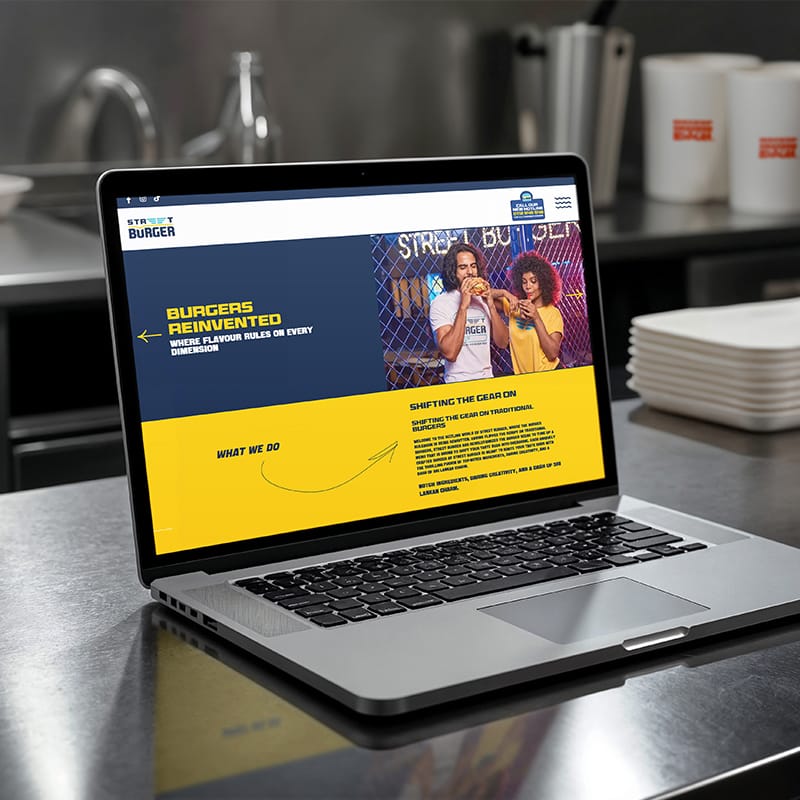
The company’s website showcases projects including Street Burger, BlueLotus360, Mascons Ltd, Rockwall Hotel and The Brandhub.
Tectera’s web design packages offer different scopes depending on the project:
| Package | Page allowance | Design approach | Timeframe |
|---|---|---|---|
| Online Starter | Up to 5 pages | Template-based | 3 weeks |
| Business Builder | Up to 10 pages | Template-based | 4 weeks |
| Ultimate Empire | Up to 20 pages | Custom design | 6 weeks |
| Google Dominator | Up to 35 pages | Custom design | 10 weeks |
The published package descriptions include mobile-friendly layouts, search-friendly URLs, Google Analytics integration and different levels of maintenance, training, hosting and SSL depending on the package.
Tectera also offers:
- Website design and development: Websites planned around business requirements and brand identity.
- Ecommerce development: WooCommerce stores with payment integrations, product management and order management.
- AI website development: Website solutions involving AI-focused capabilities.
- SEO: Search engine optimization to support organic visibility.
- Social media marketing: Digital marketing support for business awareness and customer acquisition.
Explore Tectera’s services:
- Website Design and Development
- Ecommerce Development
- AI Website Development
- Search Engine Optimization
- Social Media Marketing
Request a Website Design Quotation
If you are planning a new website, ecommerce store or website redesign, share your requirements with Tectera.
Include your preferred website type, required pages, functionality, target audience, expected timeframe and approximate budget.
Contact Tectera to discuss your website project.
Frequently Asked Questions About Website Design Costs in Sri Lanka
1. How much does a basic website cost in Sri Lanka?
A basic website may cost approximately LKR 30,000–80,000 for a simple one-page project. A small multi-page business website may cost LKR 50,000–200,000, depending on its design, content and functionality. These are indicative planning estimates rather than fixed industry prices.
2. How much does a five-page website cost in Sri Lanka?
A five-page website may cost approximately LKR 50,000–200,000, depending on the design approach, number of unique layouts, content requirements, functionality and provider. A template-based website can require substantially less work than a custom-designed corporate website.
3. How much does an ecommerce website cost in Sri Lanka?
An ecommerce website may cost approximately LKR 150,000–1,200,000 or more. The final price depends on the product catalogue, payment gateways, shipping integrations, inventory management, customer accounts and custom features.
4. How much does a WordPress website cost in Sri Lanka?
A WordPress website may cost from approximately LKR 30,000 for a simple project to several hundred thousand rupees for a customized business website. Ecommerce functionality, premium plugins, custom layouts and integrations can increase the price.
5. Is website design a one-time payment?
Website design and development are generally charged as a project cost. However, domain registration, hosting, maintenance, software licences and additional support may involve recurring expenses.
6. How much does website hosting cost in Sri Lanka?
Hosting costs depend on the provider, server resources, storage, traffic requirements and support level. Shared hosting, managed WordPress hosting and cloud hosting have different pricing structures. Always check renewal prices and the resources included.
7. How long does it take to build a website in Sri Lanka?
A simple website may take a few weeks, while a corporate website, ecommerce store or custom application can require several weeks or months. Content readiness, design approvals, integrations and revisions affect the timeline.
Tectera’s published web design packages range from three to ten weeks, depending on the package. Its ecommerce packages list four weeks for Basic, six weeks for Standard and eight weeks for Advanced. Actual project schedules should be confirmed against the agreed scope.
8. Is WordPress better than a custom-built website?
Neither is universally better. WordPress is suitable for many business websites, blogs and ecommerce projects. Custom development is useful when a business requires specialized workflows, complex integrations or functionality that existing platforms cannot efficiently provide.
9. Does website design include SEO?
Some web design packages include basic SEO setup, such as metadata, heading structure, search-friendly URLs and sitemap configuration. Ongoing SEO involves additional work such as keyword research, content creation, technical improvements and authority building.
10. Can I update my website after it is completed?
Yes. If your website includes a content management system such as WordPress, authorized users can update text, images, blog posts and products without changing the underlying code. Training can help your team manage these updates.
11. Who owns the website after development?
Ownership and licensing should be clearly defined in the project agreement. Your business should have appropriate access to its domain, hosting, website administrator, website content and agreed deliverables. Confirm any third-party licence restrictions.
12. Is it better to choose the cheapest website design package?
Not necessarily. A low-cost package may be suitable for a simple website, but it may not include content writing, advanced functionality, custom design, maintenance or ongoing support. Compare the deliverables and long-term costs before making a decision.
13. Can I redesign my website without losing Google rankings?
A redesign can be completed while protecting existing search visibility, but careful SEO planning is essential. Preserve valuable content and URLs where possible, implement relevant 301 redirects when URLs change, update internal links, check canonical tags and test the new website before launch. Rankings can still fluctuate, so monitor Google Search Console.
14. Should I include website maintenance in my budget?
Yes. Regular maintenance helps keep software updated, backups working and website functionality secure. The appropriate maintenance arrangement depends on the website platform, complexity and business importance.
Conclusion: How Much Should You Budget for Website Design in Sri Lanka?
The right website budget depends on what you want your website to accomplish.
A simple online presence may only require a one-page website. A growing business may need a professional multi-page website with lead-generation functionality. An online retailer may require a complete ecommerce system, while a larger organization may need custom development and integrations.
Before selecting a provider, compare the scope, design quality, functionality, ownership, SEO foundation, hosting and ongoing support—not just the initial quotation.
A well-planned website should serve your business beyond launch. It should provide a useful experience for customers, support your marketing activities and give your business room to grow.
If you are planning a website project, prepare your requirements and contact Tectera to discuss a solution that matches your business objectives and budget.

