
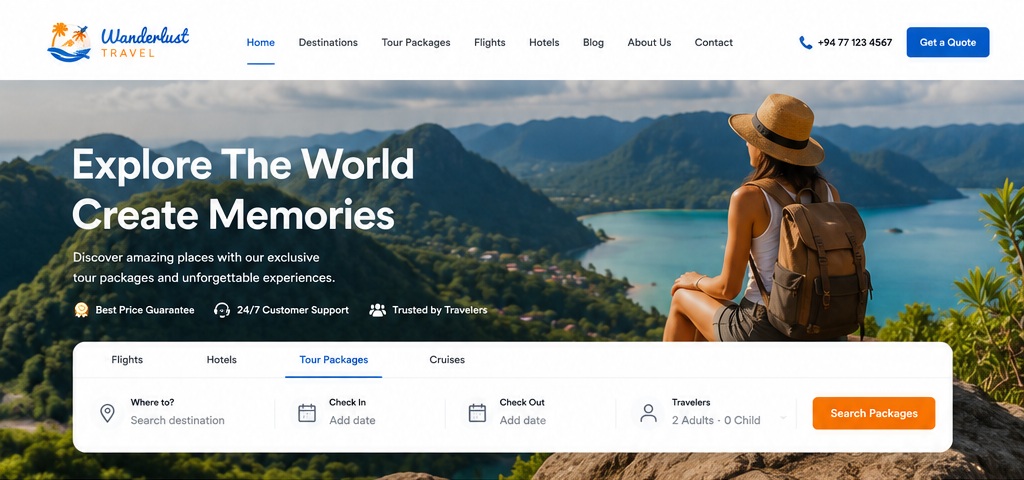
Your travel agency’s website isn’t some digital brochure. It can be your most powerful marketing and sales tool. Travelers rarely book with the first agency they find. Instead, they compare multiple options online, judging each based on how professional, trustworthy, and easy to use the website feels.
That means your site is often the very first impression a potential customer gets of your agency. An appealing, well-structured design builds credibility, inspires trust, and influences decisions. This article explores practical design ideas with crucial features to make a travel agency website stand out.
Idea #01: Use Stunning Destination Photography and Videos
Travel is inherently visual as people book trips when they can see themselves there.
- High-quality destination photos: Crisp, professional images of beaches, mountains, or cityscapes immediately capture attention.
- Short promotional videos: A 30–60-second clip showcasing highlights of a destination (sunset cruises, cultural festivals, adventure sports) can inspire action.
- Authentic travel experiences: Use real traveler photos or testimonials to build trust. Airbnb’s success is partly due to authentic imagery that feels relatable.
- Optimized media for fast loading: Compress images and use modern formats (WebP) to avoid slow load times.
Idea #02: Feature a Powerful Hero Section
Your homepage is the digital storefront; if it doesn’t inspire, visitors leave.
- Inspiring headline: A clear, emotional statement like “Discover the World, One Journey at a Time.”
- Eye-catching visuals: A full-width hero image or looping video of a dream destination.
- Clear value proposition: Highlight what makes your agency unique.
- Primary call-to-action (CTA): Buttons such as “Plan Your Trip” or “Get a Quote” should be prominently displayed.
- Search or inquiry form: Allow users to explore destinations or request information instantly.
Idea #03: Make Tour Packages Easy to Browse
Organized navigation is key to reducing friction and boosting bookings.
- Destination categories: Group tours by region or theme (Adventure, Luxury, Family).
- Filters by budget, duration, or travel style: Let users find packages that fit their needs.
- Clear package summaries: Include highlights, inclusions, and exclusions in bullet form.
- Pricing transparency: Hidden costs severely break trust; always show upfront pricing.
- Featured packages: Spotlight trending or seasonal tours to guide decision-making.
Idea #04: Simplify Booking and Inquiry Forms
Reducing friction directly increases inquiries and conversions.
- Short forms: Only ask for essential details (name, email, destination, dates).
- Mobile-friendly inputs: Large tap targets and autofill options improve usability.
- Clear instructions: Guide users step by step to avoid confusion.
- Confirmation messages: Reassure users that their requests have been received.
- Secure submission: SSL certificates and trust badges build confidence.
Idea #05: Build Trust with Customer Reviews and Testimonials
- Social proof is one of the strongest influences on booking decisions.
- Verified testimonials: Display reviews from real travelers with verified bookings.
- Traveler photos: Authentic images of customers enjoying their trips add credibility.
- Ratings: Use star ratings or satisfaction scores to communicate quality quickly.
- Success stories: Share case studies of how your agency helped travelers plan dream vacations.
- Video reviews: Short clips of customers sharing their experiences can be more persuasive.
Idea #06: Highlight Travel Expertise
Travelers want to know why they should choose your agency over competitors.
- Years of experience: Showcase longevity and reliability.
- Certifications: Display industry accreditations (IATA, ASTA) to build trust.
- Local destination knowledge: Emphasize insider tips and cultural expertise.
- Awards: Highlight recognitions from tourism boards or travel associations.
- Partnerships: Mention collaborations with airlines, hotels, or tour operators.
- Personalized travel planning: Stress your ability to tailor trips to individual preferences.
Idea #07: Optimize for Mobile Travelers
With over 70% of travel searches happening on mobile devices, mobile optimization is non-negotiable.
- Responsive design: Ensure layouts adapt seamlessly to different screen sizes.
- Fast loading: Compress images and enable caching to speed up page load time.
- Easy navigation: Simplify menus and use clear icons.
- Click-to-call buttons: Allow instant contact with agents.
- Mobile-friendly booking: Streamline forms and payment gateways for smaller screens.
Idea #08: Create Detailed Destination Pages
Destination-specific pages serve both travelers and search engines.
- Attractions: Highlight must-see landmarks and activities.
- Itineraries: Provide sample day-by-day plans.
- Travel tips: Share advice on local customs, transportation, and safety.
- Best time to visit: Seasonal insights help travelers plan effectively.
- FAQs: Address common questions about visas, weather, or costs.
- Photo galleries: Inspire with curated visuals.
Idea #09: Use Strong Calls-to-Action (CTAs) Throughout the Website
CTAs are the digital “nudges” that guide visitors toward conversion.
- Examples: Book Now, Request a Quote, Plan Your Trip, Contact Our Travel Experts, Explore Packages.
- Strategic placement: CTAs should appear in the hero section, on tour package pages, in inquiry forms, and even in blog posts.
- Conversion impact: HubSpot reports that personalized CTAs convert 202% better than generic ones.
- Best practice: Use action-oriented language and ensure buttons stand out visually with contrasting colors.
Idea #10: Maintain Consistent Branding
Consistency builds recognition and professionalism.
- Color palette: Stick to 2–3 brand colors across all pages.
- Typography: Use a readable font family consistently for headings and body text.
- Logo placement: Keep the logo visible in the header and footer.
- Visual style: Align imagery and icons with your brand identity.
- Brand messaging: Ensure tone and language reflect your agency’s values.
Idea #11: Improve Website Speed and Performance
Slow websites discourage users from browsing packages or submitting inquiries.
- Image optimization: Compress and use modern formats like WebP.
- Efficient coding: Minify CSS/JS and remove unused scripts.
- Reliable hosting: Choose providers with strong uptime guarantees.
- Browser caching: Store frequently accessed files locally to speed up reloads.
- Performance monitoring: Use tools like Google PageSpeed Insights or GTmetrix.
Idea #12: Add Helpful Travel Resources
Educational content positions your agency as a trusted travel advisor.
- Travel guides: Destination-specific guides with insider tips.
- Visa information: Simplify complex requirements for international travelers.
- Packing tips: Offer checklists for different climates and trip types.
- FAQs: Address common concerns about bookings, cancellations, or safety.
- Blog articles: Share travel trends, destination highlights, and customer stories.
- Travel updates: Provide real-time alerts on restrictions, weather, or local events.
Common Travel Agency Website Mistakes to Avoid
Outdated Package Information
Travelers lose trust when they see expired deals or incorrect itineraries. Outdated content signals poor management and reduces credibility.
Low-Quality Images
Grainy or stock photos fail to inspire travelers. Travel is emotional; visitors expect high-quality visuals that spark imagination.
Slow Loading Times
53% of mobile users abandon sites that take longer than 3 seconds to load (Google). Heavy images, poor coding, or unreliable hosting are common culprits.
Confusing Navigation
Overcrowded menus or unclear hierarchies frustrate users. 79% of users abandon sites with confusing navigation or broken flows.
Hidden Pricing
Lack of transparency erodes trust. Travelers want upfront costs, not surprises. Transparent pricing increases booking likelihood by 23% (Phocuswright).
Complicated Inquiry Forms
Long, confusing forms discourage inquiries. Reducing form fields from 11 to 4 increased conversions by 120% (HubSpot).
Poor Mobile Usability
With 70%+ of travel searches happening on mobile, poor mobile design is a deal-breaker. Issues include small fonts, hard-to-tap buttons, and non-responsive layouts.
Weak Calls-to-Action (CTAs)
Generic CTAs like “Submit” fail to inspire action. Strong CTAs like “Book Now” or “Plan Your Trip” guide users toward conversion.
Missing Contact Details
Lack of visible phone numbers, email, or live chat reduces trust. 44% of website visitors leave if contact information is missing or hard to find.
A high-performing travel agency website is the gateway to building trust, inspiring travelers, and driving bookings. Your site must instill confidence, simplify planning, and make the next step effortless. Each design choice, from the hero section to the booking form, helps guide travelers toward conversion.
Contact Tectera who offers website design in Sri Lanka to get more travel agency website design ideas.

